The swimwear industry is at a pivotal juncture where sustainability and innovation intersect, driven by consumer demand for eco-friendly fashion. Zero-waste cutting, empowered by laser technology and advanced layout optimization algorithms, is revolutionizing how swimsuits are manufactured. This approach not only addresses environmental concerns by drastically reducing fabric waste but also enhances design precision and production efficiency. In this exploration, we delve into the mechanics of these technologies and their practical applications across various swimwear styles, from bikinis to one-pieces, while highlighting the role of suppliers and distributors in promoting sustainable practices.
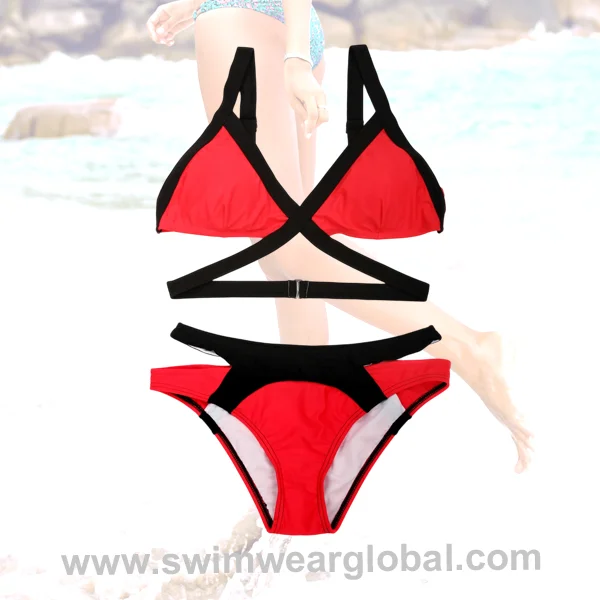
Laser cutting has emerged as a cornerstone of modern swimwear production, offering unparalleled accuracy in cutting complex patterns. Unlike traditional methods that rely on manual cutting or die-cutting machines, laser cutting uses focused beams controlled by computer software to slice through fabrics with minimal kerf loss. This precision is crucial for intricate designs, such as those found in a tassel bikini or a red lace bikini, where every detail must be crisp and consistent. When combined with layout optimization algorithms, which intelligently arrange pattern pieces on fabric rolls to maximize material usage, waste can be reduced to near zero. These algorithms employ computational geometry and heuristic methods to nest pieces tightly, considering factors like fabric grain, stretch properties, and design constraints. For swimwear manufacturers, this means significant cost savings and a smaller environmental footprint, aligning with global sustainability goals.
The application of zero-waste cutting spans a wide range of swimwear types, catering to diverse consumer preferences. For instance, bespoke strapless swimsuit designs require custom patterns that fit individual measurements perfectly. With optimization algorithms, these patterns are arranged to minimize fabric scraps, ensuring that even small production runs are efficient. Similarly, for tankini sets and custom one piece swimsuit orders, the algorithms adapt to varying fabric widths and design elements, such as cut-outs or asymmetrical hemlines. This flexibility allows brands to offer personalized options without compromising on sustainability. In the wholesale market, swimwear wholesale vendors and swimwear distributors are increasingly partnering with suppliers who adopt these technologies. Wholesale bikinis suppliers, for example, can provide collections that include a double-strap triangle bikini top in soft pink or a green zebra swimsuit made from green zebra fabric, all produced with minimal waste. This not only meets the demand for unique styles but also reinforces the brand’s commitment to eco-conscious manufacturing.
Optimization algorithms are particularly beneficial for swimwear with complex designs or mixed materials. Take double bikini sets, which involve multiple pieces like tops and bottoms; the algorithms ensure that all components are nested efficiently on the same fabric roll. For lace swimsuit or fringe swimsuit styles, where delicate trims or overlays are involved, laser cutting provides clean edges without fraying, and the algorithms account for these additional elements to avoid waste. Bandeau swimwear and tassel swimwear often feature irregular shapes that can be challenging to cut traditionally, but with optimized layouts, even these designs become feasible with zero waste. Additionally, color block triangle bikini styles, which combine different fabric colors, benefit from algorithms that align color blocks precisely, reducing mismatches and off-cuts. By integrating these technologies, manufacturers can produce swimwear that is both stylish and sustainable, appealing to environmentally aware consumers.
From a commercial perspective, zero-waste cutting is transforming how swimwear brands market their products. Brands that invite customers to explore our stunning collection of bikinis, one-pieces, and swimsuits often emphasize their use of laser cutting and optimization algorithms as key selling points. A line of women’s swimwear that includes women bikinis produced with these methods can attract a niche market seeking quality and sustainability. Even from top-of-the-line competitive swimwear designed for athletes to casual swimsuits and beach dresses for leisure wear, zero-waste practices enhance brand credibility. An affordable collection of men’s and women’s swimsuits manufactured this way demonstrates that sustainability can be accessible, not just a luxury. Retailers and swimwear distributors play a crucial role in educating end consumers about these benefits, fostering trust and loyalty in a competitive market.
The implementation of zero-waste cutting requires collaboration across the supply chain. Swimwear wholesale vendors work closely with manufacturers to ensure that designs are optimized for minimal waste from the outset. This often involves digital prototyping and simulation using algorithm-driven software to preview layouts before cutting. Swimwear distributors, in turn, leverage this information to promote the eco-friendly attributes of the swimwear to retailers and consumers. By highlighting specific examples, such as how a red lace bikini is cut with precision to save fabric, they can convey tangible benefits. Moreover, as consumer awareness grows, demand for transparency in production processes increases, making technologies like laser cutting and optimization algorithms essential for brand differentiation.
In conclusion, zero-waste swimsuit cutting through laser cutting and layout optimization algorithms represents a significant leap forward in sustainable fashion. It enables the production of high-quality, diverse swimwear—from bikinis to one-pieces—while minimizing environmental impact. As these technologies evolve, we can expect further innovations, such as AI-enhanced algorithms for real-time layout adjustments or integration with recycled fabrics. For the swimwear industry, embracing zero-waste practices is not just a trend but a necessity for future growth, aligning with broader societal shifts towards sustainability. By adopting these methods, brands can cater to conscientious consumers, reduce costs, and contribute to a greener planet, proving that style and sustainability can coexist harmoniously.