The sun-drenched landscape of swimwear is witnessing a brilliant fusion of fashion and functional technology with the advent of UV-reactive apparel. This innovative category, encompassing dynamic women’s bikinis and performance-oriented men’s swim shorts, offers more than style—it provides an interactive visual cue for sun exposure while delivering essential protection. This article delves deep into the manufacturing intricacies, material science, and detailed cost structures behind these smart garments, offering valuable insights for industry professionals and informed consumers alike.
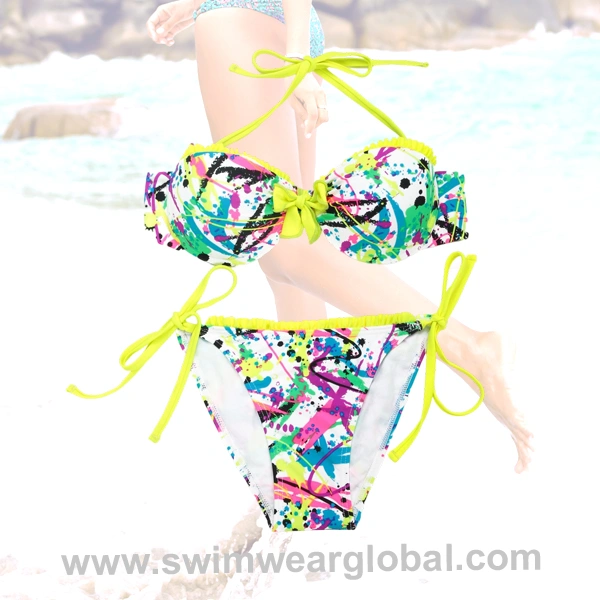
The Science of Color: Understanding UV-Reactive Technology
At the heart of this innovation lies photochromic technology. Unlike standard dyes, photochromic compounds undergo a reversible molecular change when exposed to ultraviolet (UV) radiation. Integrated into swimwear fabric, these compounds cause a visible color shift—often from a pale to a vibrant hue—upon sun exposure, reverting once UV light is removed. This serves as a playful yet practical reminder of sun intensity. Crucially, the base fabric is engineered to provide a UPF (Ultraviolet Protection Factor) of 50+, blocking over 98% of harmful UVA and UVB rays, making it a cornerstone of modern top-of-the-line competitive swimwear designed for outdoor athleticism.
From Polymer to Product: Materials & Manufacturing Process
The creation of UV-reactive swimwear is a multi-stage process demanding precision and expertise.
-1. Material Synthesis and Fabric Creation:
The journey begins with the fabric.A high-performance blend of Nylon (Polyamide) and Spandex (Elastane) forms the ideal base. Nylon offers exceptional durability, chlorine resistance, and a soft hand feel, while Spandex (typically comprising 15-22% of the blend) grants essential four-way stretch and shape recovery. The UV-reactive capability is introduced primarily through two advanced methods:
· Fiber-Infusion Method: Photochromic pigments are incorporated directly into the polymer melt before the nylon or polyester filaments are extruded. This creates a uniform, long-lasting color-change property intrinsic to every fiber.
· Microencapsulation Finishing: Ready-made fabric is treated with a finish containing microcapsules filled with photochromic dyes. These capsules bond to the fibers, releasing their color upon UV exposure.
-2. Design, Cutting, and Assembly:
Once the smart fabric is ready,the design process brings the garment to life. This stage is where a brand’s vision for its line of women’s swimwear is realized, translating patterns for bikini tops, bottoms, one-pieces, and men’s shorts. Precision laser cutting minimizes waste and ensures consistency. Skilled technicians then assemble the pieces using flatlock or coverstitch seams with UV-resistant polyester thread. This construction is vital for comfort, durability, and maintaining the integrity of the color-change feature, distinguishing quality pieces in any affordable collection of men’s and women’s swimsuits from poorly made alternatives.
-3. Quality Assurance and Testing:
Rigorous testing is non-negotiable.Each batch undergoes checks for color-fastness, consistent photochromic response, UPF rating verification, and resistance to chlorine, saltwater, and repeated washing. This ensures the final product delivered to a customer exploring our stunning collection of bikinis, one-pieces, and swimsuits meets promised performance and safety standards.
A Detailed Cost Analysis: Breaking Down the Investment
Producing UV-reactive swimwear involves a higher cost structure than conventional items. Here’s a transparent breakdown for a mid-market product.
-1. Raw Material & Component Costs (45-55%):
· UV-Reactive Fabric: The single largest cost driver. This specialized textile commands a premium, approximately 4-6 times the cost of standard swim fabric. Price: $10 – $18 per linear meter.
· Lining & Findings: Additional lightweight lining for modesty/support, high-quality elastics, and durable hardware (buckles, rings, zippers). Cost: $2.50 – $5 per garment.
-2. Manufacturing & Labor (25-30%):
· This covers the technical cutting, sewing, and finishing labor. The complex handling of reactive fabric and precise construction for a supportive bikini top or a well-structured short increases costs. Cost: $5 – $10 per unit.
-3. Research, Development & Tech Licensing (10-15%):
· An amortized cost covering the initial R&D for fabric sourcing/development, prototype testing, and potential licensing fees for proprietary photochromic technology.
-4. Logistics, Marketing & Packaging (15-20%):
· Includes hangtags that educate consumers on the technology, eco-friendly packaging, and distribution. Marketing efforts to highlight this innovation within a range of swimsuits and beach dresses are essential for consumer education and brand positioning.
Estimated Total Direct Cost Per Piece:
· Men’s Swim Shorts: $20 – $32
· Women’s Bikini Set: $25 – $40
· Women’s Athletic One-Piece: $28 – $45
The final retail price typically applies a 4x to 5x markup to account for brand value, wholesale margins, and retail overhead.
Market Positioning and Consumer Value
UV-reactive technology caters to diverse segments within the swimwear market. It allows brands to enhance their line of women’s swimwear with a unique selling proposition that combines sun safety awareness with aesthetic appeal. For the performance-oriented segment, including top-of-the-line competitive swimwear for open-water training, the technology offers added UV monitoring. Meanwhile, integrating these pieces into an affordable collection of men’s and women’s swimsuits makes innovative sun protection more accessible. Ultimately, whether showcased as part of our stunning collection or as a standalone tech-feature, UV-reactive swimwear represents a significant leap forward, embedding interactive functionality into the very fabric of beach and poolside fashion.