A Guide to Navigating Changes in Swimsuit Export Regulations
The global swimsuit export market is undergoing a series of regulatory updates concerning material safety, labeling requirements, and compliance certifications. For swimwear wholesale vendors and swimwear distributors, adapting to these changes in a timely manner is crucial for maintaining international competitiveness. This guide aims to facilitate a smooth transition.
Step 1: Deep Dive into Regulatory Core – Materials & Chemicals
The new regulations generally impose stricter limits on chemicals in textiles. For instance, standards for certain azo dyes and heavy metal content have become more rigorous. This significantly impacts products using special fabrics.
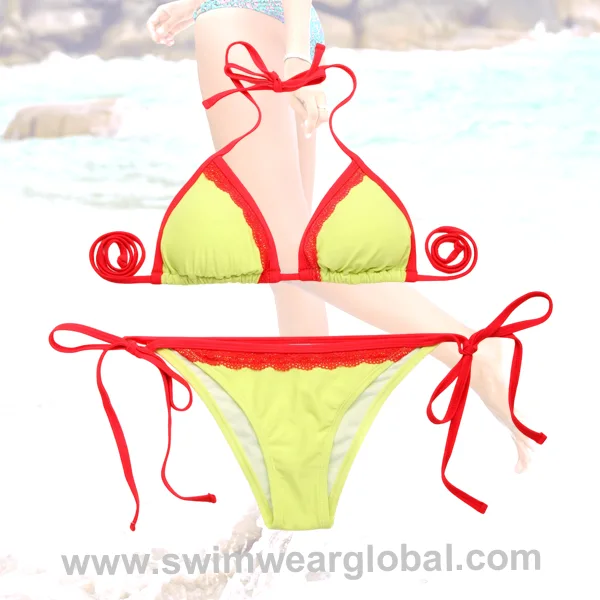
· Targeted Testing: If you supply swimsuits made with green zebra fabric, like a green zebra swimsuit, you must ensure its printing dyes comply with the new standards. Similarly, the lace components in a lace swimsuit and the fringe decorations on a fringe swimsuit require additional physical safety tests to prevent the risk of choking from detached small parts.
· Prepare in Advance: Communicate closely with your wholesale bikinis suppliers to obtain the latest Material Safety Data Sheets (MSDS) and declarations of conformity.
Step 2: Adapting Product Design and Structure for Compliance
Regulations often specify requirements for garment durability and safety. Design teams need to integrate compliance into the creative process from the start.
· Reinforced Structure: For items like a double bikini or a double-strap triangle bikini top in soft pink, it’s essential to ensure the strength of the strap and band seams is sufficient, especially under tension in water. Bandeau swimwear and bespoke strapless swimsuit rely on internal boning and silicone strips for stability to prevent slipping; the materials for these components must also meet environmental regulations.
· Decoration Safety: The tassels on tassel swimwear and tassel bikini need to be securely attached and pass pull tests. All differently colored fabrics used on a color block triangle bikini must individually meet colorfastness requirements.
Step 3: Certifications, Labeling, and Documentation Preparation
Updated certifications and accurate labeling are your passport through customs.
· Obtain Necessary Certifications: Apply for the relevant safety certifications (e.g., EU CE marking, US CPC certificate) for your products, whether it’s a tankini or a custom one piece swimsuit, based on the target market.
· Transparent Labeling: Composition labels must be accurate. If a lace bikini has a main body of 80% Nylon + 20% Spandex and lace that is 100% Polyester, the label must clearly state this. Size, country of origin, and care instructions must also be legible.
Conclusion
Facing regulatory changes, proactive action is far superior to a passive response. Swimwear wholesale vendors should view this as an opportunity to optimize their supply chain, enhance product quality, and build market trust. Through comprehensive management from material sourcing to final labeling, you can ensure your product line—from classic bandeau swimwear to trendy fringe swimsuit—flows smoothly in the international marketplace.