Executive Summary
The global swimwear industry in 2025 is characterized by a powerful dichotomy:the relentless pace of fast-fashion trends and a concurrent, growing demand for premium customization and sustainability. China, maintaining its position as the world’s preeminent manufacturing hub, has adeptly navigated this complex landscape. This report provides a comprehensive analysis of China’s swimwear export performance in 2025, detailing key economic drivers, dissecting nuanced regional market behaviors from the Americas to Europe and Australia, and forecasting the strategic shifts expected to define 2026. The adaptability of Chinese manufacturers, serving both swimwear wholesale vendors seeking volume and swimwear distributors pursuing exclusive custom one piece swimsuit lines, underscores the sector’s resilience and innovative capacity.
2025 Export Data and Macro-Economic Analysis
Preliminary export data for 2025 indicates a steady 8-12%year-on-year growth in value for Chinese swimwear exports. This growth is not uniform but reflects a strategic pivot. While volume remains strong, the increase is increasingly driven by higher average order values (AOVs). Several macroeconomic factors are at play. Post-pandemic “revenge travel” and sustained consumer interest in athleisure and resort-wear continue to fuel global demand. However, inflationary pressures in Western markets have created a bifurcated buying pattern: value-oriented bulk purchases for mainstream retail, and investment-driven buys for high-margin, trend-forward or bespoke pieces.
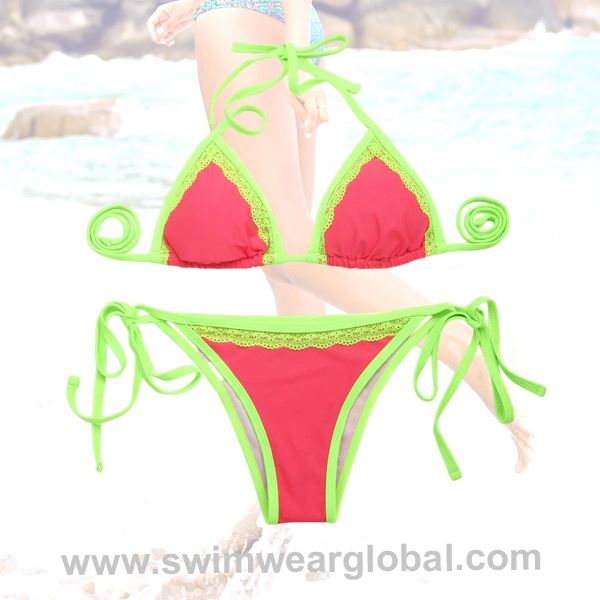
Chinese manufacturers have responded with unparalleled agility. The era of competing solely on cost is over. Leading exporters now compete on speed-to-market for trends like the double-strap triangle bikini top in soft pink, vertical integration for quality control, and advanced capabilities in small-batch production for bespoke strapless swimsuit orders. This flexibility allows wholesale bikinis suppliers to cater to a broad spectrum of clients, from fast-fashion giants to niche boutique brands. The industry’s focus has shifted towards offering a complete line of women’s swimwear that balances an affordable collection of men’s and women’s swimsuits with premium, high-fashion segments.
Detailed Regional Market Analysis
-1. North America: The Fast-Fashion Engine and Niche Premium
The United States remains the largest single export destination,driving volume and trend cycles. Demand is highly segmented. Major retailers and e-commerce platforms require rapid, large-scale deliveries of trending items—think vibrant color block triangle bikini sets or playful fringe swimsuit designs seen across social media. This sector works closely with swimwear wholesale vendors adept at quick-turnaround production.
Simultaneously,a strong premium niche exists. Driven by body positivity and personalization, there is growing demand for customized fits and unique styles. This is where capabilities for custom one piece swimsuit and made-to-order tankini sets become critical differentiators for manufacturers. The market for lace swimsuit options, particularly a sophisticated red lace bikini, also remains perennially strong for contemporary brands.
-2. Europe: Sustainability, Sophistication, and Regulation
European markets present a more consolidated demand for quality,craftsmanship, and increasingly, verifiable sustainability. EU consumers and brands are highly discerning, favoring timeless designs, premium fabrics, and ethical production credentials. The popularity of elegant bandeau swimwear and sophisticated tassel bikini styles reflects a preference for chic, resort-ready aesthetics over overtly trendy pieces.
Crucially,impending EU regulations on sustainability and digital product passports are reshaping supply chains. Forward-thinking Chinese manufacturers are proactively investing in certified recycled fabrics, such as innovative green zebra fabric made from regenerated nylon, and transparent processes to maintain access to this high-value market. This region is a key driver for From top-of-the-line competitive swimwear brands also sourcing their fashion lines from specialized factories.
-3. Australia and Latin America: Sun-Seeking Sensibility and Bold Aesthetics
These sun-drenched markets prioritize durability,UV protection, and bold design. Australian consumers, in particular, have a high swimwear consumption rate, favoring bright colors, secure fits for active wear, and distinctive prints like the green zebra swimsuit. The double bikini (a style with more coverage) and supportive tankini are consistently popular, alongside fashion-forward pieces.
Latin American markets,especially Brazil and Mexico, show a strong affinity for bold colors, intricate cut-outs, and sensual designs. Styles like the tassel swimwear and daring double-strap triangle bikini top in vibrant hues perform exceptionally well. Distributors here often seek a compelling mix of fashion-forward items and core basics.
Key Trends and Strategic Imperatives for Suppliers
· Material Innovation as a Branding Tool: Fabric technology is a key selling point. Beyond traditional nylon and spandex, manufacturers are promoting chlorine-resistant blends, sculpting fabrics for custom one piece swimsuit designs, and, most importantly, sustainable alternatives. Explaining the provenance of materials (e.g., recycled content in green zebra fabric) is now part of the sales narrative.
· The “See Now, Buy Now” Supply Chain: The ability to rapidly produce and ship trending designs identified on social media is paramount. This requires digital prototyping, flexible manufacturing, and agile logistics—a core competency for successful wholesale bikinis suppliers.
· Segmentation and Specialization: The market is fragmenting. Some manufacturers excel in producing vast affordable collection of men’s and women’s swimsuits, while others carve out niches in luxury lace swimsuit lines, performance competitive swimwear, or comprehensive ranges that include swimsuits and beach dresses as complementary cover-ups.
2026 Outlook and Predictions
The export growth for Chinese swimwear is projected to continue into 2026 at a similar rate of 7-11%,but the path will be defined by strategic depth over breadth.
-1. Sustainability as a Gatekeeper: Compliance with European sustainability regulations will become a baseline for doing business with premium global brands. Investments in circularity will accelerate.
-2. Hyper-Personalization and Tech Integration: Demand for bespoke strapless swimsuit and custom one piece swimsuit options will grow, aided by 3D body scanning and fit simulation technologies offered at the B2B level.
-3. Market Diversification: Look for increased export focus on emerging, high-growth markets in the Middle East (modest swimwear lines) and Southeast Asia, alongside consolidation in mature markets.
-4. Brand Building by Manufacturers: Leading Chinese suppliers will increasingly develop their own design-forward brands or exclusive white-label services for international distributors, moving further up the value chain.
Conclusion
China’s swimwear export industry stands at a sophisticated juncture.Its success in 2025 is built not on cheap labor, but on a formidable ecosystem capable of delivering everything from millions of trend-driven bikinis to a single, perfectly crafted custom one piece swimsuit. The future belongs to those manufacturers and their partners—the swimwear distributors and wholesale bikinis suppliers—who can master the trifecta of speed, sustainability, and specialization. By continuously innovating in fabrics, embracing demand for personalization, and navigating diverse regional tastes—from the bold aesthetics of Latin America to the regulated, quality-conscious markets of Europe—China is poised to dress the world’s beaches and pools for years to come.